

In the realm of hot forging, the impact of temperature on our clients’ product components is unmistakable. This exploration delves into the relationship between forging temperatures and the high-temperature phase changes. Continue reading and discover how heat treatment improves metallurgic properties and therefore impacts the core of our hot forging manufacturing process.
Temperature composes a symphony of transformations in various metals, each with its own metallurgical and structural characteristics. This interplay of heat and pressure shapes the core structure of non-ferrous metals like aluminum impacting the alloy’s malleability.
Mastery of the impact of temperature on hot forging is the foundation of producing high-quality tailored final products by improving properties like fatigue resistance, strength, durability, surface treatability, and corrosion resistance.
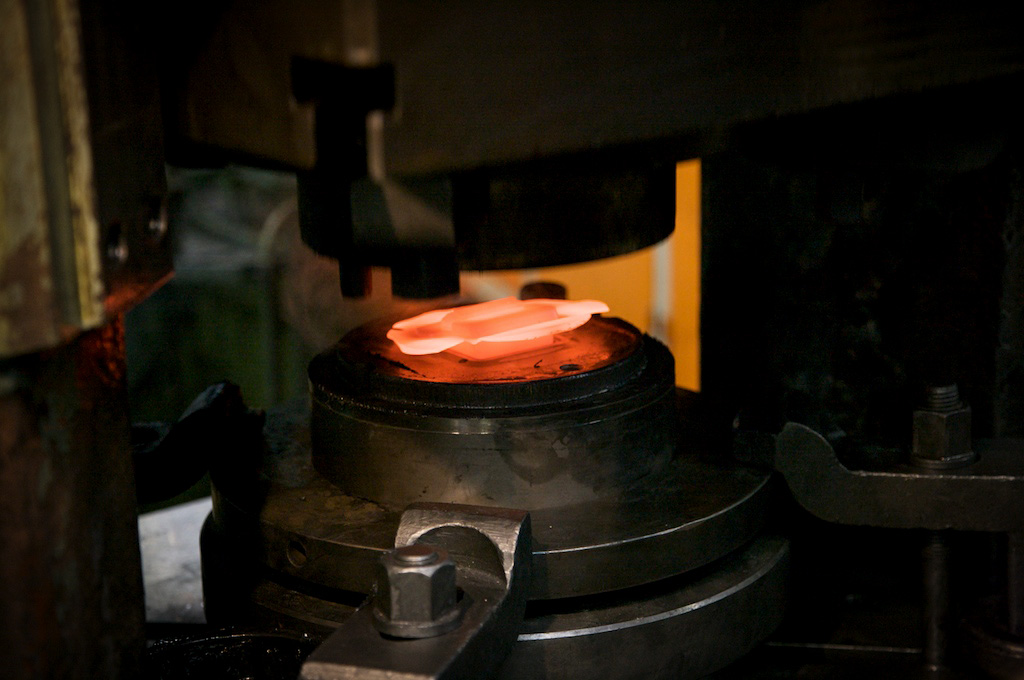
Maintaining precise temperatures during the hot forging process is paramount. Read on to explore how temperate control improves metallurgic properties and quality final results.
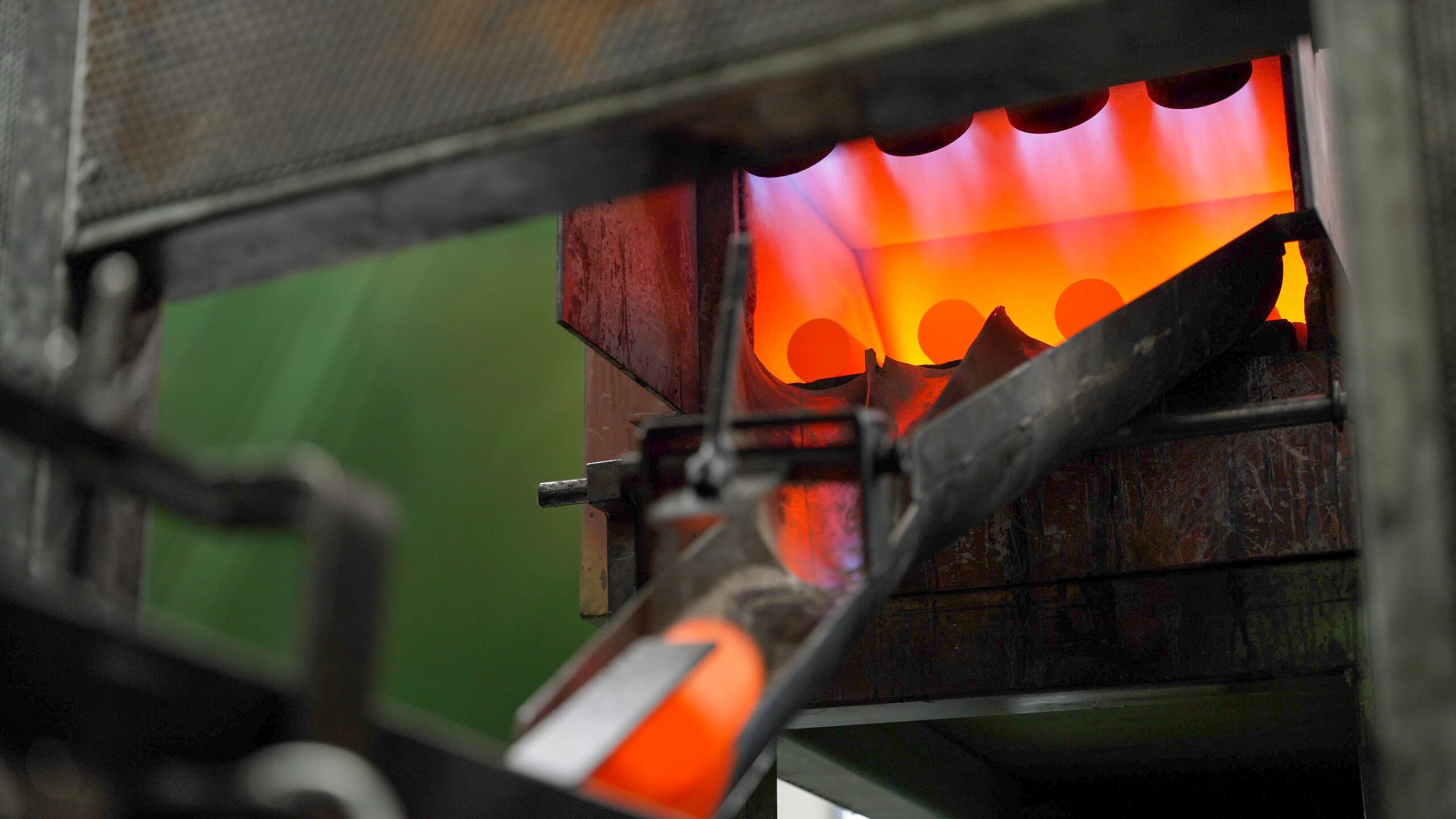
Heating billet temperatures towards their high-temperature change phase transition is a precise job. For optimal forge ability, each alloy type has its unique melting points. Depending on our client’s product requirements and usage, the exact temperature of this step is found in over 75 years of forging experience. For Aluminum product parts, the billets are heated between 300-500°C.
The die temperature represents a delicate balance and determines the durability of the product. If the temperature is too low, there is a risk of the product rupturing under the accumulated pressure, while too high a temperature leads to material damage through combustion.
Billets coming out of the ovens are subject to close temperature controls to ensure they are kept within the specified range. The cooling and heating rates, intervals between billets and die shape forging precision, are an expertise mastered by our expert professionals. Pyrometry ensures accuracy in temperature control, maintaining desired material properties and product quality.
Elevating billet temperatures excessively triggers material combustion and initiates recrystallization—a high-temperature change transition from the alpha to beta phase. New grains form, altering material properties, rendering it more susceptible to deformation, and diminishing part quality. Controlling recrystallization is pivotal to upholding desired attributes and quality standards.
After forging, the temperature is brought back close to 100 degrees Celcius through air-and-water quenching to set their shape. Rapid cooling is necessary for materials with narrow melting point ranges to avoid undesired phase changes.
For the pursuit of a greater understanding of our temperature control within the manufacturing process, please contact our specialists and find out how our 75 years of experience will contribute to your production success.
As the leading expertise in the hot forging and machining of non-ferrous alloys, our specialists have extensive experience in high-quality manufacturing processes and are able to adapt to rapidly changing environments. For example, the trend to a lead-free future has a high impact on alloy type choice resulting in adapting the heat treatment that products used to be manufactured on. To achieve consistent final products, the impact of temperature has to undergo specific processing and controlling.
With specialized production facilities in Germany, France, Hungary, and the Netherlands, we are a one-stop shop for aluminum forging solutions. Contact our experts for detailed information on our forging techniques or download the whitepaper to find out how temperature control of alloys and the manufacturing processes guarantee the highest quality products.
|