12-7-2023 By: Britt Hegeman
Britt Hegeman

Balancing Alloy Performance and Safety

Lead alloys have been a crucial element in the production process as it acts as a valuable component due to its unique properties. It enhances the machinability, formability, and overall workability of the lead alloys, making them easier to shape and mold during the Hot Forging processes. Additionally, alloys as leaded brass help reduce friction and wear on the tools used, thereby prolonging their lifespan.

However, it is essential to address the removal of lead from these lead alloys, as poison of such poses significant health and environmental risks. The major source of human exposure to lead occurs in Residential houses through food, water, air, soil, and (paint) dust. The use of leaded brass in pipes for water circulation remains an important source of lead in some areas. Lead finds its way into drinking water from lead alloys as leaded brass used throughout drinking water systems. Notably, lead can leach into water from lead-based solder used to join pipes, lead-containing brass faucets and fixtures, and the wearing-away of old lead service lines. Global organizations are actively improving the standards on the maximum allowable concentration of lead alloy in taps for drinking water by pursuing greater use of lead free solder alloys.


The Dark Legacy of Lead Alloys Unveiled


1. Health Hazards
Lead is a toxic heavy metal that poses significant health risks, particularly when ingested or inhaled. Even low levels of exposure to lead alloys can have lifelong impacts leading to various health issues, including developmental delays in children, neurological damage, impaired cognitive function, kidney damage, and reproductive problems.

2. Environmental Impact
Lead brass alloys is also harmful to the environment. Its release into soil, water, and air can contaminate ecosystems and pose risks to plants, animals, the ecosystem, and humans. Lead pollution is a serious concern, and efforts to pursue lead free alloy use and exposure are important for environmental protection.

3. Regulations and Safety Concerns
Due to its health risks, many countries have implemented strict regulations on the use of lead alloy. This includes the regulated rule of using lead free solder alloy in consumer products, such as toys, electronics, and plumbing materials. Compliance with alloy lead-related regulations is necessary for ensuring product safety and public health.

4. Recycling Challenges
Lead alloys can be challenging to recycle due to its toxic nature. Specialized processes and precautions are required to handle and recycle lead alloy containing materials properly, adding complexity and cost to the recycling process.

5. Mechanical Properties
Lead solder has relatively low strength and hardness compared to many other metals. This limits its applications in situations requiring high mechanical strength or wear resistance.

6. Lead Alloy Stability
In some cases, lead alloy can reduce the mechanical stability or reliability of certain alloys. Leaded brass alloy for example may be more susceptible to corrosion, fatigue, or creep under specific conditions, limiting their suitability for critical applications.


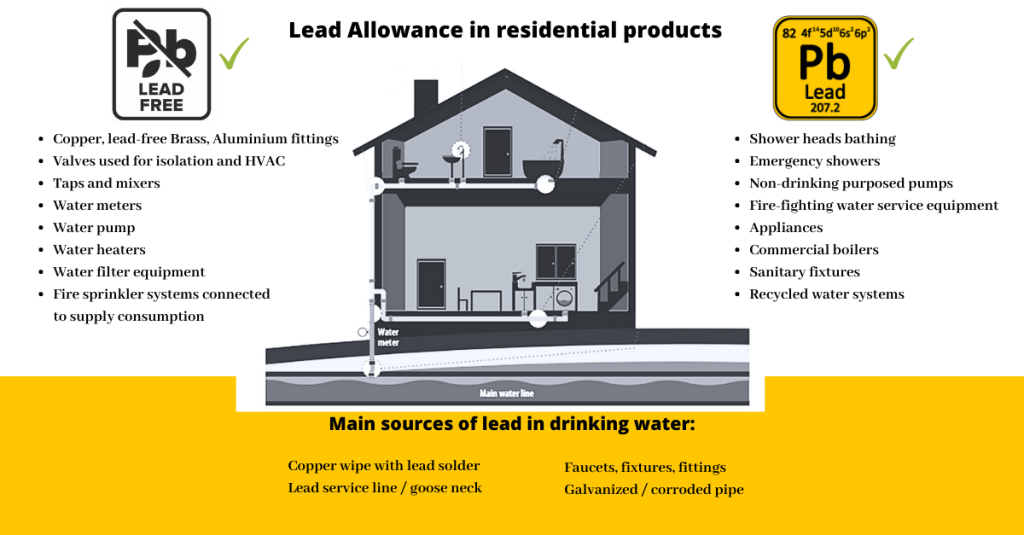
Sources of Lead within homes


Lead Home Allowances

Lead Free Alloy Components in Home Technology

Lead-free alloy standards have revolutionized the components used in Home Technology, addressing concerns of lead leaching into the water supply from plumbing fittings. Through the removal of leaded Brass or Copper alloys, compliance with regulations has been ensured, minimizing the risk of lead contamination and safeguarding public health. These advancements have significantly enhanced the safety and quality of sanitary, plumbing, water, and HVAC systems

Lead Free Alloy Alternatives in Hot Forging

As a Hot Forging company working in possible leaded materials like Brass and Copper, environmentally friendly alternatives must be embraced to ensure the safety and sustainability of each of our products while complying with evolving industry standards. Appropriate lead-free alternatives within Home Technology applications include:

  1. Aluminium: Lightweight and corrosion-resistant, Aluminium is a natural lead-free alloy, making them ideal for plumbing components that require strength, thermal conductivity, and corrosion resistance.
  2. Brass: Opt for lead-free Brass alloys that utilize bismuth or silicon as replacements. By using silicon, the mechanical characteristics are enhanced, similar to the properties previously achieved with leaded brass in Hot Forging processes. These lead free solder alloys offer similar properties and can be used in various applications, including plumbing Valves & Fittings, and can potentially contain as little as 0.1% up to t0.25%. Studies and tests have been conducted proving that only low concentrations were observed with results being less than 0.16 1 μg/L.
  3. Copper: Copper is a widely used lead-free alloy in Hot Forging processes. While Copper itself may contain trace amounts of lead, lead-free Copper alloys, such as Bronze or phosphor bronze are ideal alternatives. By utilizing these alloys, we can ensure compliance with environmental regulations while maintaining the desired mechanical properties and functionality of our products. This is particularly important as Copper plumbing with lead-tin solders and Brass faucets and fittings have been globally prevalent in domestic plumbing systems.

Global Lead Requirements


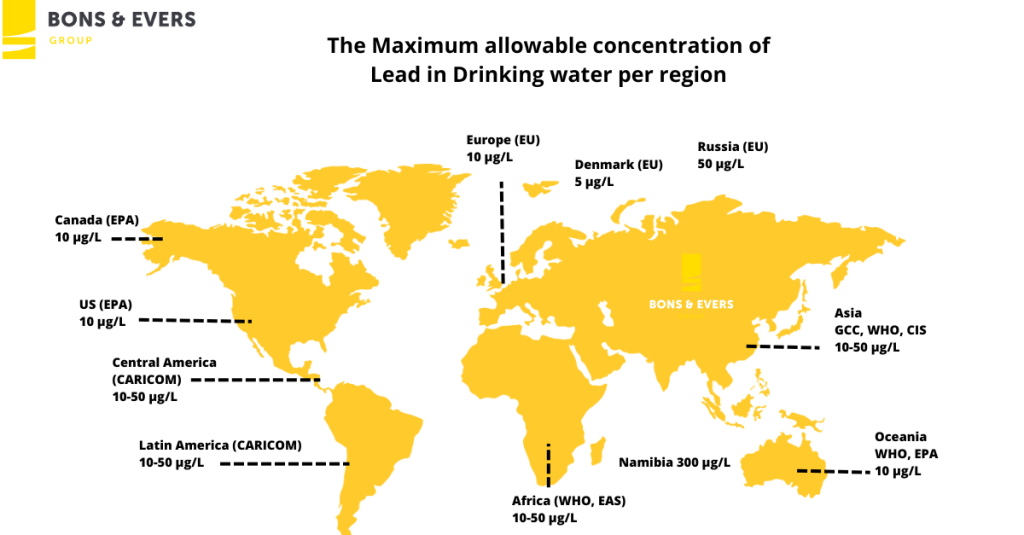
Global organizations are responsible for and impacting the guidelines, regulations, standards, and mutual cooperation to protect public health are listed beneath. Look at the figure below to find an overview of the set standards of maximum allowable concentration in water sources through lead alloy per region and organization.

11

Transitioning to Lead Free Solder alloys

European Union
The European Union establishes drinking water directives and regulations to ensure safe and clean drinking water through using lead free solder alloys. The EU Water Framework Directive and Drinking Water Directive set standards and guidelines for water quality, including measures to reduce lead levels within the obsolete directive 98/93EG. The Right2Water initiative is a European citizen’s initiative advocating for the unequivocal recognition of water and sanitation as indispensable human rights. Following this initiative, the old directives were evaluated in 2016 the renewed EU Drinking Water Directive (2020/2184) was adopted in 2020, to be implemented by January 12, 2023. In it, quality standards, monitoring, leakage prevention, and consumer awareness were tightened.

WHO & EPA
According to the World Health Organization (WHO) and US Environmental Protection Agency guidelines (EPA), Lower-income countries have a standard maximum lead concentration of 50 µg/l. In contrast, countries with a higher income have and comply with the standard of 10 µg/L PB. However, the Lead-and-Copper rule has been revised in 2022 and set the maximum contaminant level goal at zero, thus lead-free, by 2040. To accomplish this, together with The Global Lead-Free Water Pledge, a voluntary initiative will work towards preventing lead alloy leaching in new drinking water systems by 2030.

Australia
The standards in Australia have transitioned to more rigid standards due to the new edition of The National Construction Code in 2022, introducing a new limit for the allowable level of lead alloy in plumbing, coming into effect on 1 September 2025. This causes a disruptive change in the Home Technology market as leaded Brass and Copper products must remain under 0.25% lead to convey drinking water.  These shifts and changes present an opportunity for Bons & Evers Group to capitalize on its commitment to lead-free alloy production. By already offering lead-free plumbing products, such as copper and brass alloys that comply with the new regulations, Bons & Evers Group is well-positioned to meet the growing demand for compliant materials thus being a trusted provider of safe and sustainable plumbing solutions of the Australian market.

Bons & Evers: Pioneering Lead-Free Solutions

Choosing Bons & Evers as a solution partner offers distinct advantages based on several factors. Firstly, Bons & Evers is well-versed in European regulations concerning lead free solder alloys, ensuring compliance with strict standards for materials used in plumbing systems. This expertise guarantees that our products meet the necessary requirements for safety and quality.

  • Lead-Free Product Offerings: Bons & Evers stands out by offering tailored solutions to meet specific customer needs. Whether it is providing lead-arm or lead-free alloy options, we have the flexibility to manufacture diverse requirements and compositions required for our client’s requests.
  • Sustainable Manufacturing Processes: Bons & Evers prioritizes sustainable manufacturing practices to reduce its environmental impact. This includes optimizing production processes, zero-waste, and employing energy-efficient technologies.
  • Compliance with Regulations: Bons & Evers ensures that its products and manufacturing processes comply with local and international regulations regarding lead content in plumbing systems by only cooperating with certified supplies such as Diehl.
  • Research and Development: Bons & Evers invests in Research and Development efforts to explore innovative lead-free solder alloys, technologies, and manufacturing techniques.
  • In addition to ISO 9001 for Quality Management and ISO 14001 for Environmental Management, Bons & Evers also holds ISO 50001 certification for Energy Management.  By prioritizing safety, sustainability, and innovation, Bons & Evers plays a vital role in advancing a lead-free future while prioritizing sustainability and responsible manufacturing.

Choosing Bons & Evers provides clients with the assurance of working with a trusted partner that prioritizes compliance, flexibility, and customer satisfaction. Are you ready to make the shift toward a Lead-Free Alloy Future? Contact our experts today and let’s embark on the journey together!
Talk to a specialist


Questions about this article?